The Movement
SheLEADs was created with a vision that goes beyond improving access to navigation support. It is designed to transform the systems that shape how Black women and women of color experience breast cancer care.
Meaningful change requires more than individual interventions. It requires trusted partnerships, informed healthcare providers, empowered patients, coordinated community organizations, and healthcare systems intentionally designed to deliver equitable, culturally responsive care.
SheLEADs brings these elements together to build the infrastructure communities need to create lasting change — strengthening relationships between patients, communities, healthcare providers, organizations, and systems across North Carolina.
FROM NAVIGATION TO SYSTEMS TRANSFORMATION
Peer navigation is an essential part of SheLEADs, but it is not the endpoint.
SheLEADs has evolved into a comprehensive systems transformation strategy that recognizes that long-term improvements in outcomes require coordinated action across multiple levels. The initiative simultaneously strengthens healthcare provider engagement, improves health literacy, builds organizational capacity, advances policy and systems change, and establishes sustainable partnerships capable of supporting equitable care across North Carolina.
The goal is to create a healthcare environment where equitable, culturally responsive care is built into the way systems operate — rather than depending on individual patients to overcome barriers on their own.
THE POWER OF COMMUNITY
Community isn’t an audience. It’s a partner in change.
SheLEADs is intentionally designed to strengthen the organizations already serving communities across North Carolina. Rather than creating parallel systems, the initiative equips community organizations with practical tools, implementation resources, technical assistance, and connections to statewide partners.
Community partners are not simply recipients of programming. They are leaders in the work — equipped with the knowledge, resources, and infrastructure to sustain health equity efforts within their own communities long after the initiative ends.
TRUST IS THE FOUNDATION
Systems change starts with trust.
For SheLEADs, trust is not simply an outcome of successful programming. It is essential infrastructure.
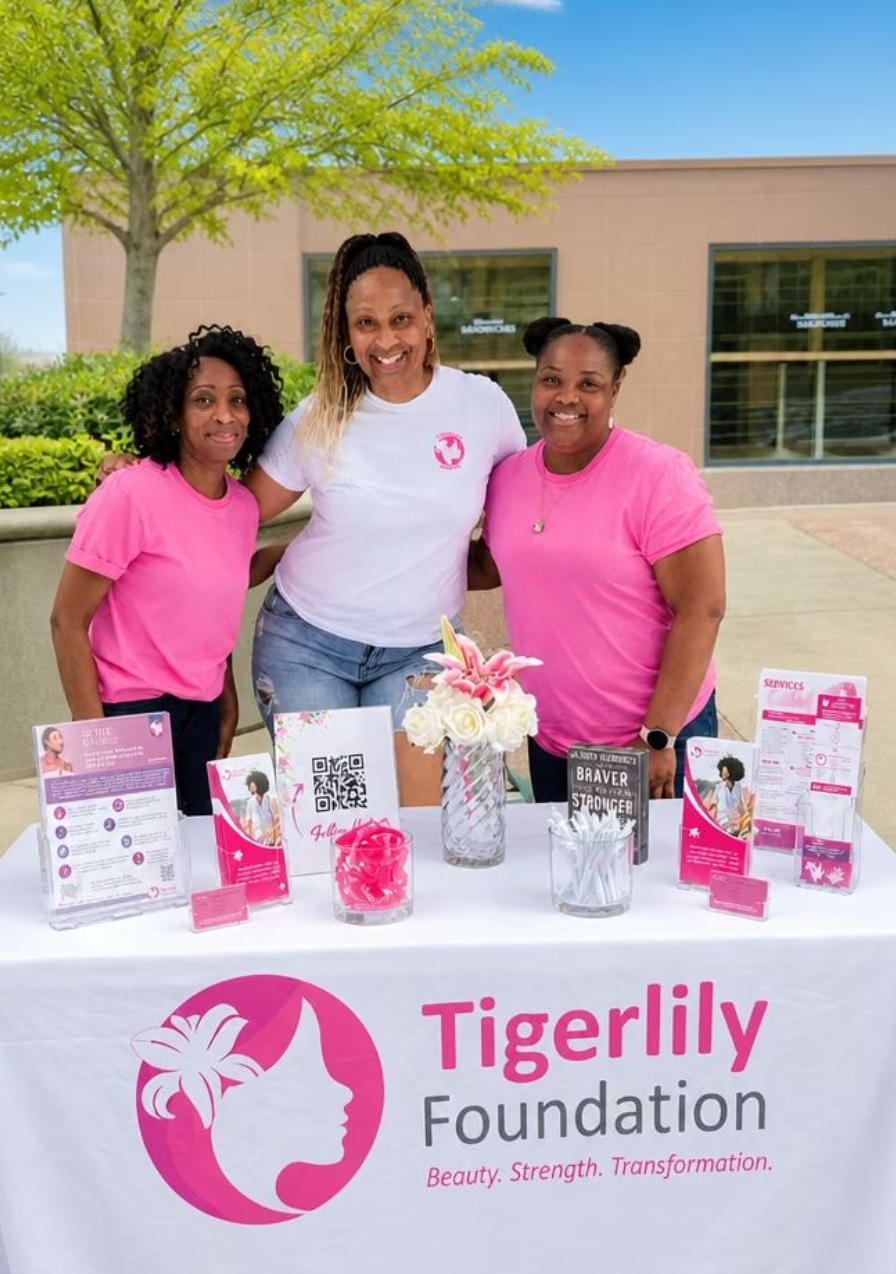
Meaningful participation and collaboration begin with relationships. Tigerlily Foundation’s longstanding relationships with patients, survivors, healthcare providers, researchers, and community organizations create a bridge between healthcare systems and the communities they serve.
SheLEADs builds on that foundation by creating spaces where community knowledge, lived experience, healthcare expertise, and organizational leadership can come together to identify barriers and develop solutions that are relevant, practical, and sustainable.
LIVED EXPERIENCE AT THE CENTER
Those closest to the problem help shape the solution.
The lived experiences of Black women and women of color navigating breast cancer care inform the way SheLEADs approaches implementation. Community voice is not an afterthought — it helps shape priorities, strategies, and decisions.
Through peer navigation, community engagement, advocacy, and partnerships, SheLEADs creates pathways for lived experience to become a source of leadership, knowledge, and systems change.
HEALTH EQUITY REQUIRES ALL OF US
No single organization can change the system alone.
Sustainable health equity requires healthcare systems, community organizations, academic institutions, advocates, patients, and providers working together toward a shared vision.
SheLEADs brings these partners together around a common goal: improving how breast cancer care is delivered, experienced, and sustained for Black
women and women of color across North Carolina.
Through these relationships, SheLEADs is building stronger connections between healthcare and community — creating opportunities to improve care coordination, strengthen patient engagement, expand access to information and resources, and address barriers that clinical interventions alone cannot solve.
WHAT MAKES THIS MOVEMENT DIFFERENT
Culturally Responsive
Health equity strategies must reflect the realities, identities, cultures, and lived experiences of the communities they are designed to serve.
Community
Driven
Communities help identify priorities, shape solutions, and build the capacity needed to sustain change.
Systems
Focused
SheLEADs addresses the policies, practices, workflows, and environments that influence access, quality, and patient experience.
Built
to Last
The initiative invests in infrastructure, partnerships, workforce development, resources, and systems that can continue beyond the life of a single program or grant.
SheLEADs is building more than a program. It is building the relationships, workforce, knowledge, resources, and systems needed to create lasting pathways toward equitable healthcare.
The model begins in North Carolina, with a vision for what becomes possible when communities are equipped to lead, healthcare systems are prepared to partner, and lived experience is treated as expertise.
See What We Do →
Culturally Responsive Care
Care that honors identity, culture, and lived experience.
Policy & Systems Change
Advancing structural equity beyond individual care.
Provider Education
Training NCPs to deliver patient-centered care.
Community Alliances
Linking organizations around shared goals.
“Black women are diagnosed younger. They face more aggressive disease. They navigate a system full of barriers — and they do it with less support. SheLEADS exists to close that gap.”
— Tigerlily Foundation, SheLEADS North Carolina
– Funded by Partnership and Generous Support –
SheLEADS is supported by Merck Foundation and Pivotal, a Gates Foundation initiative, to improve outcomes and advance health equity for Black women in North Carolina.
Together, we can create a more connected, equitable, and supportive breast cancer care experience across North Carolina.


Together, we can create a more connected, equitable, and supportive breast cancer care experience across North Carolina.